

Is soil classed as waste, and when does it need to be tested?
In most cases, yes.
Under the Waste Framework Directive (2008/98/EC), soil is generally classed as waste once it has been excavated or moved from its original position. This is because it becomes a material that the holder discards or intends to discard.
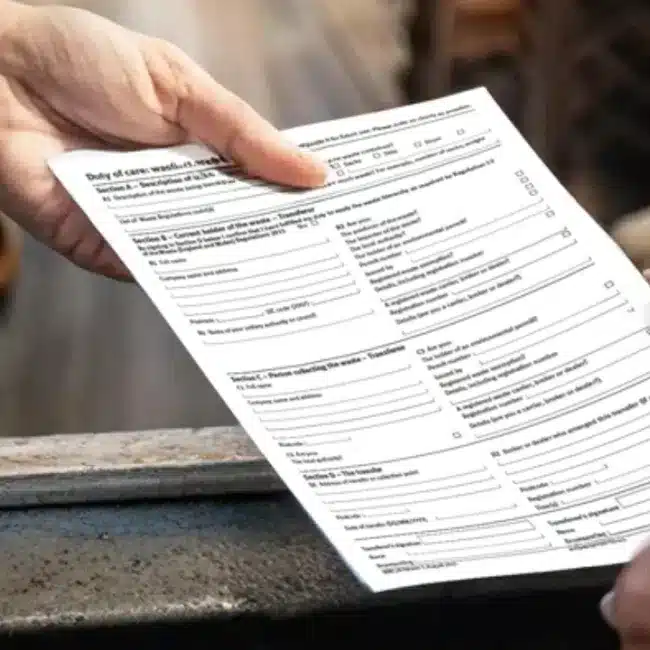
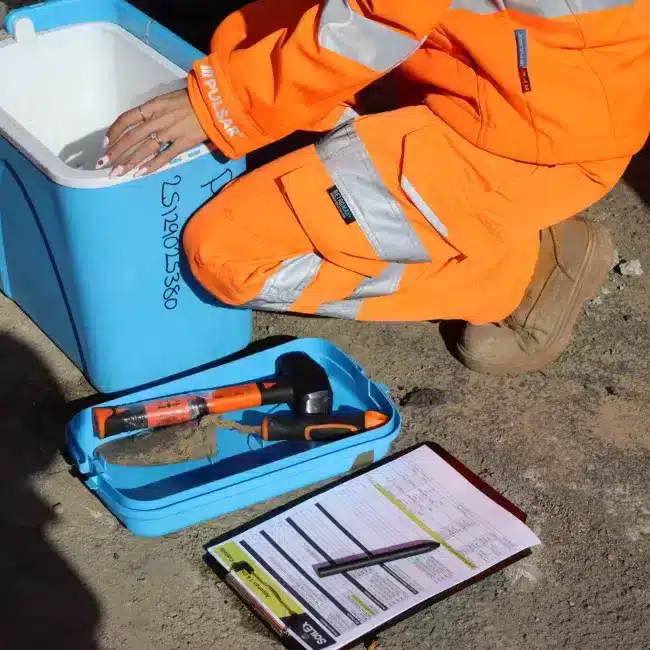
When soil is removed from site, it must be representatively sampled, tested, and classified in line with Technical Guidance WM3 v1.2.GB. This process determines whether the soil is hazardous or non-hazardous and assigns the correct List of Waste (LoW) code.
If disposal to landfill is proposed, Waste Acceptance Criteria (WAC) testing is also required to assess leachability and landfill suitability. It’s important to note that WAC results do not determine waste classification… they simply assess whether the waste can be accepted at a specific landfill type.
When soil testing is required
Testing is needed when:
- Soil will be removed off-site, reused elsewhere, treated, or disposed of.
- The site history or conditions suggest potential contamination from hydrocarbons, metals, asbestos, or other pollutants.
- The classification is uncertain and must be confirmed to meet Duty of Care requirements under UK waste legislation.
- Reuse through DoWCoP
In some cases, soils may meet end-of-waste status and be reused either on the site of origin or on another site through a Materials Management Plan (MMP) under the CL:AIRE Definition of Waste: Development Industry Code of Practice (DoWCoP).
To qualify, the MMP must:
- Be prepared in advance of the works (it cannot be applied retrospectively).
- Adhere to all DoWCoP principles, including demonstrating suitability for use through appropriate testing and characterisation.
- DoWCoP provides a recognised route to reuse excavated soils legitimately, avoiding the need for an environmental permit where the criteria are met.
What about naturally occurring soils?
Clean, naturally occurring or greenfield soils may fall outside the scope of the Waste Framework Directive and not be classed as waste, provided they are not discarded. However, chemical and geotechnical testing may still be required to confirm that the soil is suitable for its intended use or receiving site. Proper planning ensures that such soils are not inadvertently treated as waste.
Why early testing matters
Waste is often considered late in a project, but early soil testing and characterisation can save time and money. It ensures compliance with UK waste management regulations, supports sustainable material reuse, and helps avoid unnecessary project delays or landfill costs.

Ready to Start your next Project?
Contact SoilEx today and discover better waste management solutions.
Address
Head Office: 104 Russell Building, West Common, Harpenden AL5 2JQ
Regional Office: Unit 11, Millennium Business Park, Enterprise Close, Mansfield, NG19 7JY
Phone
Connect with us

At SoilEx, we deliver expert waste management solutions that help our clients identify significant cost savings on any construction project.
CALL US
ADDRESS
Head Office: 104 Russell Building, West Common, Harpenden AL5 2JQ
Regional Office: Edem Barn, Gainsborough Rd, Everton, Notts DN10 5BW