

Street Works UK June 2026 Update: Is Your Waste Transfer Note Audit-Ready?
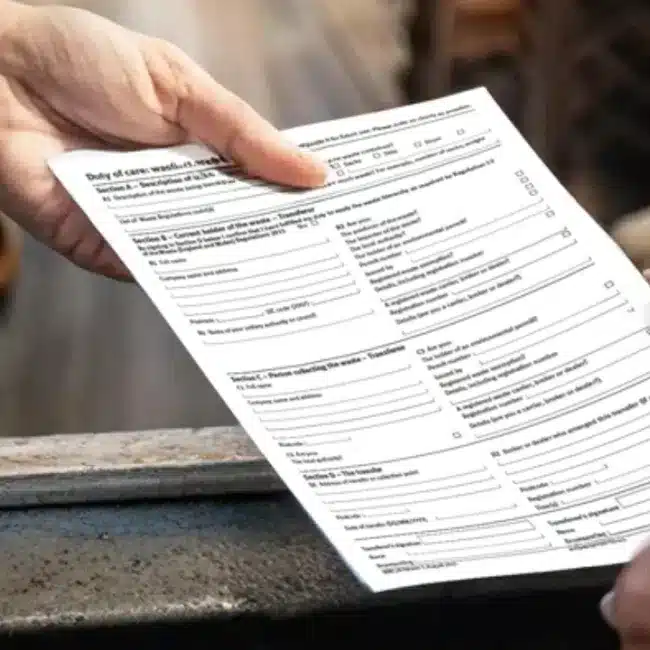
A Waste Transfer Note selected at a receiving site could now lead the Environment Agency directly back to your excavation records.
That is the key message from the June 2026 update from Street Works UK on the Material Classification Protocol.
Street Works UK has confirmed that the Environment Agency is starting a regional programme of Waste Transfer Note audits. The audit programme will involve visits to two waste receiving sites per week in each region, with five WTNs reviewed at each site. This is expected to result in around 40 audits per week nationally.
For utilities and street works contractors, this is not just a paperwork check.
The Environment Agency may use the information on the WTN to trace the waste back to the original job. The relevant organisation may then be asked to provide the desktop and visual assessments that support the classification.
The practical question is simple:
Can every WTN your organisation produces be linked quickly to a complete classification record?
What needs to be on the Waste Transfer Note?
According to the Street Works UK update, the Environment Agency will be looking for five key items on each relevant WTN:
- NRSWA permit reference or references covering the waste being transferred
- Internal job or excavation reference
- A statement confirming the waste was classified under the Material Classification Protocol
- The appropriate waste code
- The address of the works location
Street Works UK gives examples of waste codes including:
- 17 05 04for soil and stones other than those containing dangerous substances
- 17 09 04 for mixed construction and demolition waste other than the hazardous entries listed under that chapter
The correct waste code still depends on the actual waste and the evidence supporting its classification. It should not be selected through habit or convenience.
Why does this matter?
Each field on the WTN helps connect the waste received at a facility with the original excavation and assessment.
If the details are missing or inconsistent, it becomes harder to show that the waste was assessed correctly before it moved.
Common issues include:
- Missing or incorrect NRSWA permit references
- Depot addresses used instead of works locations
- Job references that do not match across records
- Generic descriptions such as “spoil” or “muck”
- EWC codes that do not match the waste
- Missing Protocol compliance statements
- Desktop or site based risk assessments that cannot be found
A WTN may look complete on its own, but still create a problem if it cannot be linked back to the right excavation record.
The WTN is not the classification assessment
A Waste Transfer Note records the movement of waste.
It does not, by itself, prove that the waste has been classified correctly.
Under the waste duty of care, waste must be described accurately so it can be handled, transported and managed safely and lawfully.
For users of the SWUK Material Classification Protocol, the classification should be supported by the required desktop and site-based risk assessments.
The June update connects these two points clearly.
The Environment Agency may start with the WTN at the receiving site, but the audit can move back through the underlying classification records.
Why now?
The Street Works UK Material Classification Protocol replaced the temporary regulatory position statements used for excavated waste from qualifying street and utility works.
RPS 298 and RPS 299 were withdrawn on 2 October 2025. GOV.UK now directs organisations to the Environment Agency-approved industry Protocol.
Street Works UK stated that the Protocol became mandatory from 1 October 2025 for qualifying works.
The June 2026 audit update shows a move from implementation into active checking.
Organisations now need to show that their records stand up to scrutiny.
Where are the main risks?
The biggest risk is disconnected information.
A utility may hold the permit data.
A contractor may hold the job pack.
A subcontractor may complete the site assessment.
A carrier may produce the WTN.
A receiving site may hold the weighbridge record.
That is normal on live works.
The problem comes when those records cannot be connected quickly.
Weak records can lead to delays, rejected or held loads, extra admin, disputes over responsibility and greater regulatory attention.
Over-classifying waste can also increase costs unnecessarily.
Under-classifying it can create a more serious compliance and environmental risk.
The aim should be a defensible classification based on the available evidence.
A simple five-load audit test
Utilities and contractors do not need to wait for the Environment Agency to make contact.
Select five recent WTNs completed under the Protocol and check whether you can quickly retrieve:
- The NRSWA permit reference
- The internal job or excavation reference
- The exact works location
- The desktop assessment
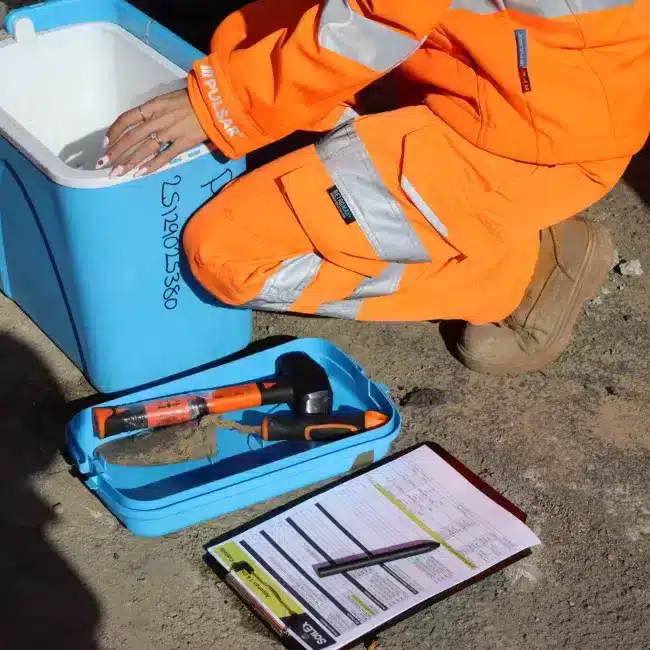
- The visual or site assessment
- The waste classification and code
- Any required testing information
- The carrier details
- The receiving site record
- Evidence that all records relate to the same movement
Then ask:
- Do the dates match?
- Do the references match?
- Does the location match?
- Does the waste description match the code?
- Is the Protocol statement included?
- Is the classification reasoning clear?
- Could someone outside the job understand the record?
If the answer is no, the issue is not just one WTN. It is a process gap.
What should receiving sites check?
Receiving sites are central to the audit programme because the Environment Agency inspections will start at waste facilities.
Sites accepting Protocol waste should check that:
- The WTN includes the required permit and job references
- The works location is recorded
- The Protocol compliance statement is present
- The waste code is permitted at the facility
- The description matches the observed material
- The carrier is appropriately registered
- Any obvious discrepancy is resolved before acceptance
Selected WTNs should also be easy to retrieve during an inspection.
SoilEx view
The June 2026 update is a reminder that the WTN must connect clearly to the excavation, the assessment and the classification decision.
A good process should allow any selected WTN to answer five questions:
- Where did the waste come from?
- Which job and permit produced it?
- What assessment was completed?
- Why was that waste code selected?
- Where did the material go?
If those answers are difficult to find, the process is not audit-ready.
For help with your SWUK Material Classification Protocol
SoilEx supports utilities, contractors and waste operators with practical implementation of the SWUK Material Classification Protocol, including classification support, record reviews, audit readiness checks and clear reporting for live works.
Contact SoilEx to discuss your Protocol process or upcoming audit requirements.

Ready to Start your next Project?
Contact SoilEx today and discover better waste management solutions.
Address
Head Office: 104 Russell Building, West Common, Harpenden AL5 2JQ
Regional Office: Unit 11, Millennium Business Park, Enterprise Close, Mansfield, NG19 7JY
Phone
Connect with us

At SoilEx, we deliver expert waste management solutions that help our clients identify significant cost savings on any construction project.
CALL US
ADDRESS
Head Office: 104 Russell Building, West Common, Harpenden AL5 2JQ
Regional Office: Edem Barn, Gainsborough Rd, Everton, Notts DN10 5BW